
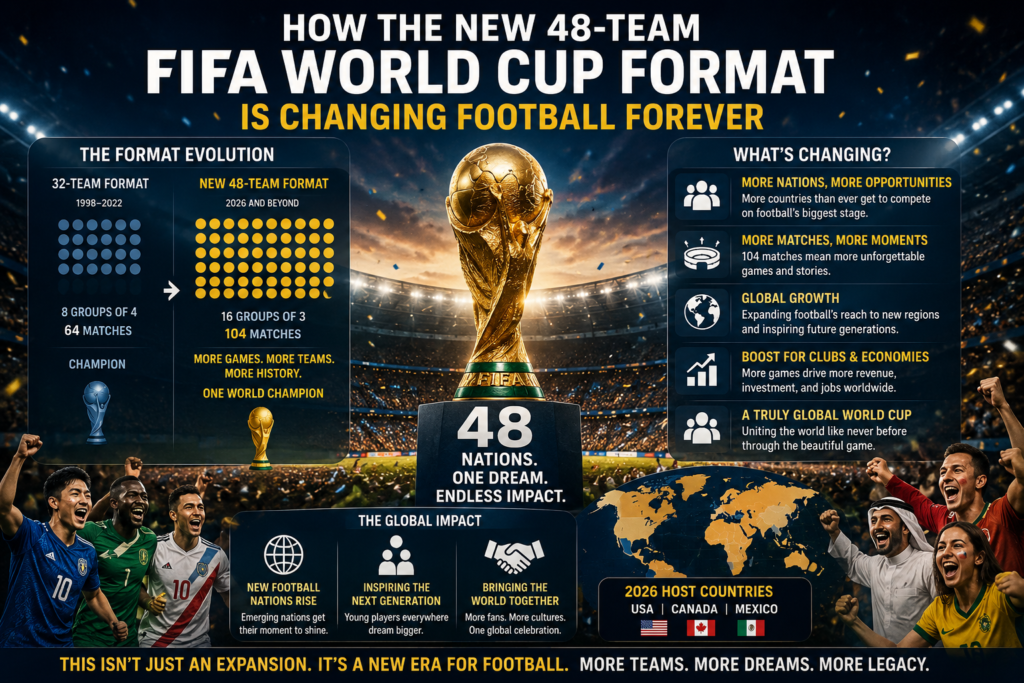
The FIFA World Cup has always been the biggest event in international football. Every four years, the world’s best national teams compete for the sport’s most prestigious trophy. In 2026, however, the tournament entered a new era with the introduction of a 48-team format, replacing the traditional 32-team competition.
This historic expansion is more than just an increase in the number of participating teams. It is changing how countries qualify, how tournaments are played, and how football continues to grow around the world.
What Is the New 48-Team Format?
The FIFA World Cup 2026 is the first edition to feature 48 national teams instead of 32.
This expansion means:
- More countries qualify for the tournament.
- More matches are played.
- More fans get to support their national teams on football’s biggest stage.
- More regions of the world are represented.
The tournament is also the first World Cup to be hosted by three countries—the United States, Canada, and Mexico.
Why Did FIFA Expand the World Cup?
FIFA introduced the new format to make the tournament more inclusive and to help football grow worldwide.
The main goals include:
More Opportunities for Smaller Nations
Under the old format, many talented teams narrowly missed qualification because there were limited spots available.
With 48 teams, more countries from Africa, Asia, Oceania, and North America now have the chance to compete against the world’s best.
Growing Football Globally
Football is becoming more popular every year. Expanding the tournament allows new nations to experience the excitement of the World Cup and encourages investment in youth development, coaching, and football infrastructure.
Greater Fan Engagement
More participating countries mean millions of additional fans become emotionally invested in the tournament. Stadium attendance, television audiences, and online engagement continue to grow as more nations take part.
How Qualification Has Changed
The qualification process now gives every football confederation more direct places in the World Cup.
UEFA (Europe)
Europe receives the largest number of qualification spots, allowing more competitive national teams to participate.
CAF (Africa)
Africa benefits significantly from the expansion, with more countries qualifying than ever before.
AFC (Asia)
Asian football has grown rapidly over the past decade, and the additional qualification places reward that progress.
CONMEBOL (South America)
South America’s strongest teams still face difficult qualification campaigns, but more nations now have realistic chances of reaching the World Cup.
CONCACAF (North, Central America and Caribbean)
The region benefits from additional qualification places, while the host nations qualify automatically.
OFC (Oceania)
For the first time, Oceania receives a guaranteed direct qualification place, giving smaller football nations a historic opportunity.
More Matches Mean More Excitement
The expanded format increases the total number of matches, giving fans more football to enjoy throughout the tournament.
Instead of a short competition, supporters now experience weeks of high-quality international football featuring teams from every corner of the world.
This also creates more opportunities for unforgettable moments, dramatic comebacks, and surprise victories.
Underdog Teams Now Have Bigger Dreams
One of the biggest advantages of the new format is the increased opportunity for emerging football nations.
Countries that previously struggled to qualify now have realistic hopes of reaching the World Cup.
This helps develop football in nations where the sport is still growing and inspires young players to pursue international success.
Financial Benefits for Football
The expanded World Cup also creates major economic opportunities.
Higher Revenue
More matches generate increased ticket sales, sponsorships, broadcasting rights, and tourism.
Better Investment
Many football associations use World Cup income to improve stadiums, youth academies, and training facilities.
Growth of Domestic Football
Success at international level often leads to greater interest in local football leagues, helping clubs attract more supporters and investment.
Challenges of the New Format
While the expansion offers many advantages, it also presents challenges.
Player Fatigue
More matches can place greater physical demands on players, especially those who already have busy club schedules.
Travel Demands
With games played across multiple countries and cities, teams and supporters may face longer travel distances.
Maintaining Competitive Balance
Some critics believe that adding more teams could create mismatches during the early stages of the tournament.
However, many believe the benefits of global representation outweigh these concerns.
What This Means for the Future of Football
The 48-team format is likely to shape international football for many years.
More countries will invest in player development because qualifying for the World Cup has become a more realistic goal.
Young footballers from emerging nations now have greater motivation, knowing their national team has a better chance of competing on the world’s biggest stage.
The expansion also strengthens football’s position as the world’s most popular sport by reaching new audiences and creating opportunities for countries that previously had little World Cup experience.
Final Thoughts
The introduction of the 48-team FIFA World Cup is one of the biggest changes in football history. It opens the door for more nations, creates greater global representation, and gives millions of new fans the chance to experience the excitement of the tournament.
While the new format brings challenges such as increased travel and a longer schedule, it also offers countless opportunities for growth, competition, and unforgettable football moments.
As the FIFA World Cup continues to evolve, the expanded tournament is helping shape a future where football is more inclusive, more competitive, and more global than ever before.
