
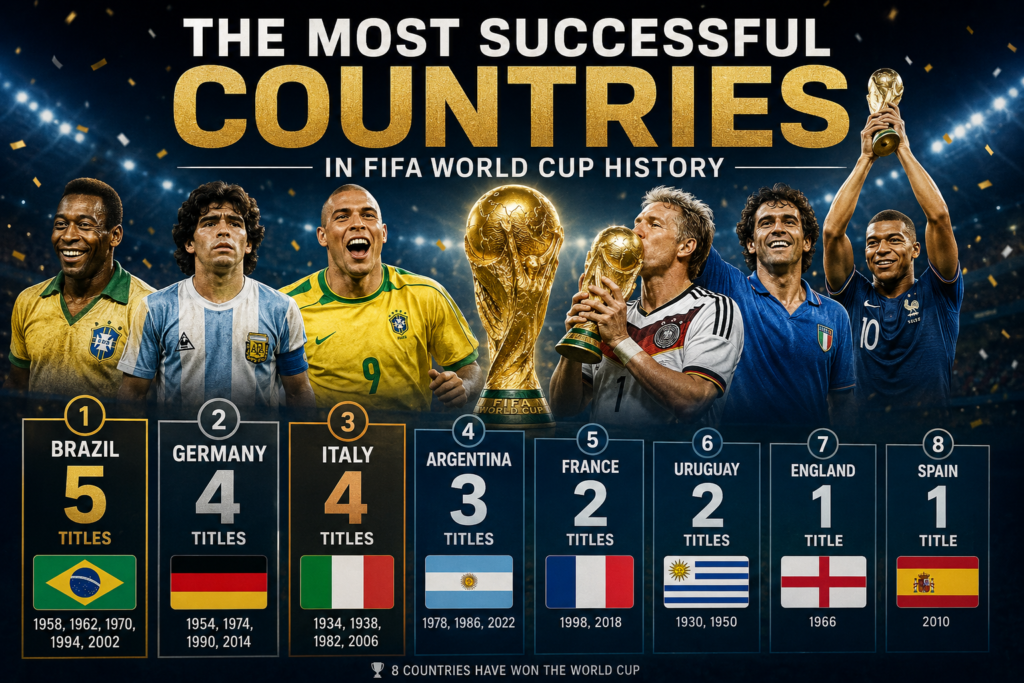
The FIFA World Cup is the most prestigious tournament in football, bringing together the best national teams from around the globe every four years. Since the first World Cup in 1930, only a handful of countries have managed to lift the famous trophy. These nations have not only won championships but have also built lasting legacies that continue to inspire football fans worldwide.
Let’s take a look at the most successful countries in FIFA World Cup history and the achievements that made them football giants.
1. Brazil – The Kings of the World Cup
No country has enjoyed more success at the FIFA World Cup than Brazil. The South American powerhouse has won the tournament five times and is the only nation to have participated in every World Cup edition.
World Cup Titles:
- 1958
- 1962
- 1970
- 1994
- 2002
Brazil is famous for producing legendary players such as Pelé, Ronaldo, Romário, Ronaldinho, and many others. Their attacking style and football culture have made them one of the most admired teams in history.
2. Germany – A Symbol of Consistency
Germany has been one of the most consistent teams in World Cup history. Known for discipline, teamwork, and mental strength, Germany has regularly reached the latter stages of the tournament.
World Cup Titles:
- 1954
- 1974
- 1990
- 2014
Germany has also finished as runners-up multiple times, proving their ability to compete at the highest level across different generations.
3. Italy – Masters of Defensive Football
Italy’s success has been built on strong defending, tactical intelligence, and excellent teamwork. The Italian national team has earned a reputation for performing well under pressure.
World Cup Titles:
- 1934
- 1938
- 1982
- 2006
Italy’s four World Cup victories place them among the most successful football nations ever.
4. Argentina – Champions of Passion and Skill
Argentina has produced some of football’s greatest players and unforgettable World Cup moments. Their success is driven by a combination of technical brilliance and competitive spirit.
World Cup Titles:
- 1978
- 1986
- 2022
Legends like Diego Maradona and Lionel Messi helped Argentina create some of the most memorable chapters in World Cup history.
5. France – A Modern Football Powerhouse
France has emerged as one of the strongest football nations of the modern era. Their blend of youth development and world-class talent has brought remarkable success.
World Cup Titles:
- 1998
- 2018
France has also reached multiple finals and consistently ranks among the favorites in major international tournaments.
6. Uruguay – The Original Champions
Uruguay holds a special place in World Cup history as the winner of the first-ever tournament in 1930.
World Cup Titles:
- 1930
- 1950
Despite being a relatively small nation, Uruguay has achieved remarkable success and remains highly respected in world football.
7. England – The Home of Football
England’s greatest World Cup achievement came in 1966 when they won the tournament on home soil.
World Cup Titles:
- 1966
Although they have won only once, England continues to be one of football’s most influential and competitive nations.
8. Spain – Masters of Possession Football
Spain transformed international football with their possession-based style known as “tiki-taka.”
World Cup Titles:
- 2010
Their victory in South Africa marked the peak of one of the greatest national teams ever assembled.
What Makes These Countries Successful?
Several factors contribute to World Cup success:
Strong Youth Development
Successful countries invest heavily in developing young talent from an early age.
Football Culture
In nations like Brazil and Argentina, football is more than a sport—it is part of everyday life.
Experienced Coaching
Top coaches help teams adapt to different opponents and tournament situations.
Consistency
Winning a World Cup requires performing at a high level over many years and across multiple generations.
The Future of World Cup Success
As football continues to grow globally, more nations are becoming competitive. Countries such as Portugal, Belgium, Croatia, and the Netherlands have consistently challenged traditional powers and could eventually add their names to the list of World Cup winners.
The expanded FIFA World Cup format also provides more opportunities for emerging football nations to make history.
Conclusion
The history of the FIFA World Cup is dominated by a select group of extraordinary football nations. Brazil leads the way with five titles, while Germany and Italy follow closely with four each. Argentina, France, Uruguay, England, and Spain have also left an unforgettable mark on football history.
These countries have shaped the sport through legendary players, iconic matches, and unforgettable victories. Their achievements continue to inspire millions of football fans around the world and serve as the standard for future generations.
