
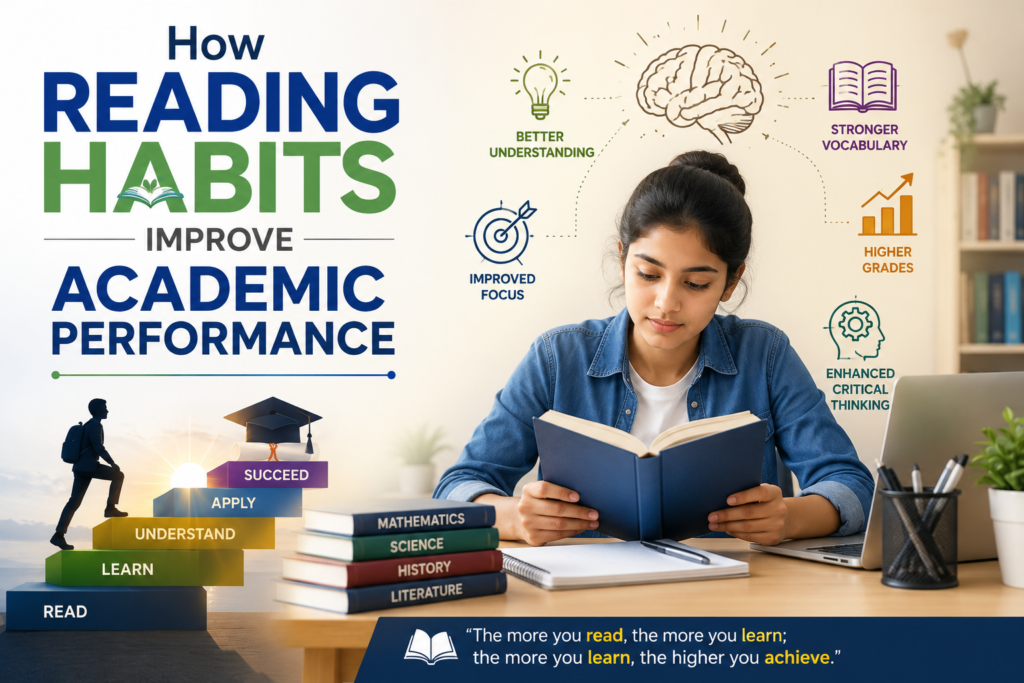
In today’s fast-paced digital world, students are constantly exposed to information from various sources. While technology offers many learning opportunities, one traditional habit continues to play a vital role in academic success: reading. Developing strong reading habits can significantly improve a student’s performance in school by enhancing knowledge, critical thinking, vocabulary, and concentration.
Building a Strong Foundation of Knowledge
Reading regularly exposes students to new ideas, concepts, and information. Whether they are reading textbooks, novels, newspapers, or educational articles, they gain a deeper understanding of different subjects. This expanded knowledge base helps students perform better in classroom discussions, assignments, and examinations.
Students who read frequently often find it easier to connect new information with what they already know. This ability to make connections improves comprehension and supports long-term learning.
Improving Vocabulary and Language Skills
One of the most noticeable benefits of reading is vocabulary growth. When students encounter unfamiliar words in context, they naturally learn their meanings and proper usage. A strong vocabulary improves writing, speaking, and comprehension skills.
Better language skills also contribute to higher academic performance. Students can express their ideas more clearly in essays, presentations, and exams, leading to improved grades and greater confidence in their abilities.
Enhancing Concentration and Focus
Regular reading requires attention and mental engagement. Unlike short social media posts or quick online content, books and longer articles encourage sustained concentration. As students develop the habit of reading for extended periods, they strengthen their ability to focus on academic tasks.
Improved concentration helps students absorb information more effectively during lessons, complete assignments efficiently, and prepare for exams with greater success.
Developing Critical Thinking Skills
Reading encourages students to analyze information, evaluate arguments, and form their own opinions. Whether reading fiction or non-fiction, they learn to interpret ideas, identify themes, and understand different perspectives.
These critical thinking skills are essential for academic achievement. Students become better problem-solvers, make informed decisions, and approach complex subjects with greater confidence.
Strengthening Memory and Comprehension
Reading exercises the brain by requiring students to remember characters, facts, concepts, and events. This mental activity improves memory retention and comprehension abilities. Students who regularly read often find it easier to recall information during tests and examinations.
Strong comprehension skills also allow learners to understand instructions, interpret questions accurately, and complete academic tasks more effectively.
Reducing Stress and Supporting Mental Well-Being
Academic pressure can sometimes cause stress and anxiety. Reading can serve as a healthy escape, helping students relax and refresh their minds. A calm and focused mind is better prepared for learning and academic challenges.
Students who maintain a balance between study and recreational reading often experience improved motivation and a more positive attitude toward learning.
Creating Lifelong Learning Habits
Reading is not only beneficial for academic success but also for personal growth. Students who develop reading habits early are more likely to become lifelong learners. They remain curious, informed, and adaptable in a rapidly changing world.
These qualities contribute to success in higher education, future careers, and everyday life.
Conclusion
Reading is one of the most effective habits students can develop to improve academic performance. It enhances knowledge, vocabulary, concentration, critical thinking, memory, and overall learning ability. By setting aside time for regular reading each day, students can strengthen their academic skills and build a foundation for long-term success. In an age filled with distractions, cultivating a reading habit remains a simple yet powerful strategy for achieving educational excellence.
