
Introduction
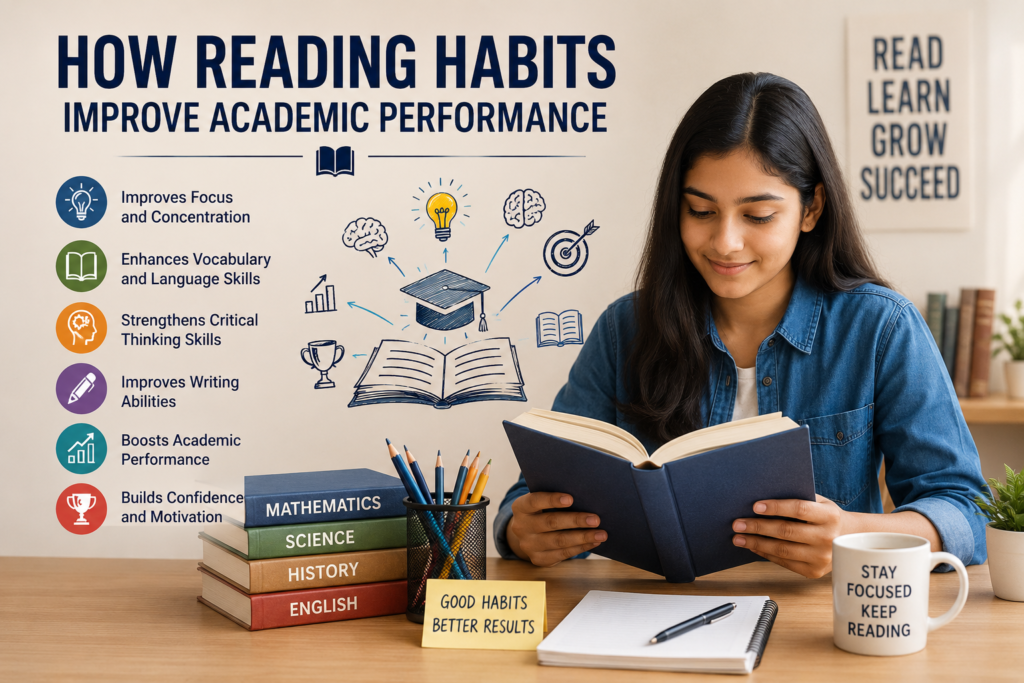
Reading is one of the most powerful habits a student can develop. It is a gateway to knowledge, critical thinking, creativity, and lifelong learning. Whether reading textbooks, novels, newspapers, research articles, or digital content, regular reading strengthens the mind and enhances a student’s ability to learn and succeed academically.
In today’s fast-paced digital world, many students spend more time on social media and entertainment than on reading. However, cultivating strong reading habits can significantly improve academic performance by enhancing comprehension, vocabulary, concentration, and analytical skills. Reading is not merely an academic requirement; it is a valuable habit that lays the foundation for educational success and personal growth.
The Connection Between Reading and Academic Success
Academic achievement depends largely on a student’s ability to understand, interpret, and apply information. Reading plays a central role in this process because it exposes students to new ideas, concepts, and perspectives.
Students who read regularly often perform better in school because they develop stronger language skills and gain a deeper understanding of various subjects. Reading helps learners absorb information more effectively, making it easier to complete assignments, participate in discussions, and perform well in examinations.
The more students read, the more confident they become in handling academic challenges.
Expanding Vocabulary and Language Skills
One of the most immediate benefits of reading is vocabulary development. Every book, article, or story introduces readers to new words, phrases, and sentence structures.
A rich vocabulary helps students:
- Understand academic materials more easily
- Express ideas clearly in writing and speaking
- Improve grammar and sentence construction
- Perform better in language-related subjects
- Build confidence in communication
Students with strong vocabulary skills often find it easier to comprehend lessons and communicate their thoughts effectively, leading to improved academic performance across multiple subjects.
Enhancing Reading Comprehension
Reading comprehension is a critical academic skill. It involves understanding, interpreting, and analyzing written information. Students who read frequently become better at identifying key ideas, recognizing important details, and drawing conclusions.
Improved comprehension helps students:
- Understand textbooks more effectively
- Follow classroom instructions accurately
- Analyze complex topics
- Answer examination questions confidently
- Retain information for longer periods
As comprehension skills improve, students become more efficient learners and achieve better academic outcomes.
Improving Concentration and Focus
Regular reading trains the brain to focus for extended periods. Unlike short social media posts or quick online content, books and educational materials require sustained attention.
Students who develop reading habits often experience:
- Better concentration during classes
- Improved attention spans
- Greater ability to complete assignments
- Reduced distractions while studying
Strong focus allows students to absorb information more effectively and maintain productivity during academic tasks.
Strengthening Critical Thinking Skills
Reading encourages students to think beyond the surface level. It exposes them to different viewpoints, arguments, and ideas that require analysis and evaluation.
Through reading, students learn how to:
- Analyze information objectively
- Identify cause-and-effect relationships
- Evaluate evidence and arguments
- Solve problems logically
- Form independent opinions
Critical thinking is essential for academic success because it helps students approach challenges with confidence and make informed decisions.
Enhancing Writing Abilities
Good readers often become good writers. Exposure to various writing styles, sentence structures, and vocabulary naturally improves a student’s writing skills.
Reading helps students:
- Organize ideas effectively
- Use appropriate language and grammar
- Develop creativity in writing
- Improve essay and report writing
- Communicate clearly and persuasively
Since writing is an important component of academic assessment, improved writing skills can have a direct positive impact on grades and overall performance.
Increasing Knowledge Across Subjects
Reading exposes students to a wide range of information beyond what is taught in the classroom. Books, magazines, and educational resources provide valuable insights into history, science, technology, culture, and current events.
This broader knowledge base helps students:
- Participate actively in classroom discussions
- Connect concepts across different subjects
- Understand real-world applications of learning
- Develop curiosity and a love for learning
Students who read extensively often gain a competitive academic advantage because they possess a deeper understanding of various topics.
Improving Memory and Information Retention
Reading stimulates the brain and strengthens memory. While reading, students remember characters, concepts, facts, and details, which exercises cognitive functions and improves information retention.
Benefits include:
- Better recall during examinations
- Enhanced learning efficiency
- Improved understanding of complex concepts
- Stronger long-term memory
A sharp memory enables students to perform better academically and retain valuable knowledge over time.
Reducing Academic Stress
Academic pressure can sometimes overwhelm students. Reading, particularly recreational reading, can serve as an effective way to relax and reduce stress.
Reading helps:
- Calm the mind
- Improve emotional well-being
- Reduce anxiety
- Create healthy study routines
- Encourage positive thinking
A relaxed and focused mind is better equipped to absorb information and perform effectively in academic settings.
Developing Lifelong Learning Habits
One of the greatest benefits of reading is that it fosters a lifelong love of learning. Students who enjoy reading are more likely to continue seeking knowledge throughout their lives.
Lifelong learners tend to:
- Adapt more easily to change
- Develop new skills continuously
- Stay informed about global developments
- Achieve personal and professional growth
This habit not only improves academic performance but also contributes to future success in higher education and careers.
Tips for Building Strong Reading Habits
Students can strengthen their reading habits by following a few simple strategies:
- Set aside dedicated reading time each day.
- Choose books and topics that match personal interests.
- Create a quiet and comfortable reading environment.
- Limit distractions from mobile devices and social media.
- Keep a reading journal to record key ideas and insights.
- Set realistic reading goals and track progress.
- Discuss books and articles with friends, teachers, or family members.
Consistency is the key to developing a reading habit that lasts.
Conclusion
Reading is a powerful habit that significantly enhances academic performance. It improves vocabulary, comprehension, concentration, critical thinking, writing skills, and overall knowledge. Beyond academic benefits, reading promotes personal growth, creativity, and lifelong learning.
In an age filled with distractions, students who make reading a regular part of their daily routine gain valuable advantages both inside and outside the classroom. By developing strong reading habits, students can unlock their full potential, achieve better academic results, and build a strong foundation for future success.
