Introduction
Education is one of the most valuable assets a person can acquire in life. It serves as the foundation for personal growth, professional success, and social development. From early childhood to higher education, learning equips individuals with the knowledge, skills, and confidence needed to navigate life’s challenges and opportunities. In today’s rapidly changing world, education is no longer just a pathway to employment; it is a powerful tool that shapes character, fosters innovation, and creates a brighter future for individuals and societies alike.
A successful future is built on informed decisions, continuous learning, and the ability to adapt to change. Education plays a crucial role in developing these qualities, making it an essential investment for anyone seeking long-term success.
Education as the Foundation of Knowledge
The primary purpose of education is to provide knowledge and understanding of the world. Through education, individuals learn about science, mathematics, language, history, technology, and many other subjects that help them make informed decisions.
Knowledge empowers people to think critically and solve problems effectively. Whether it is managing personal finances, understanding global issues, or making career choices, education provides the necessary tools to evaluate situations and make sound judgments. A well-educated person is better equipped to understand complex issues and contribute positively to society.
Developing Essential Life Skills
Education goes beyond textbooks and examinations. It helps individuals develop important life skills that are necessary for success in both personal and professional life.
Some of these essential skills include:
- Communication and interpersonal skills
- Critical thinking and problem-solving abilities
- Time management and organization
- Leadership and teamwork
- Creativity and innovation
- Adaptability and resilience
These skills help individuals handle challenges, work effectively with others, and achieve their goals. Employers often value these qualities as much as technical knowledge because they contribute significantly to workplace success.
Creating Better Career Opportunities
One of the most recognized benefits of education is its impact on career prospects. Higher levels of education often lead to better employment opportunities, increased earning potential, and greater job security.
In today’s competitive job market, employers seek candidates who possess both educational qualifications and practical skills. Education prepares individuals for specialized professions such as medicine, engineering, teaching, law, business, and information technology.
Furthermore, education encourages lifelong learning, enabling individuals to adapt to new technologies and industry changes. This adaptability is essential in a world where job requirements continue to evolve.
Building Confidence and Self-Esteem
Education plays a significant role in boosting self-confidence. As individuals gain knowledge and develop skills, they become more capable of expressing their ideas and making independent decisions.
Confidence allows people to:
- Pursue ambitious goals
- Take on leadership roles
- Face challenges with determination
- Communicate effectively with others
- Overcome fears and uncertainties
An educated person often feels more prepared to handle life’s responsibilities and seize opportunities for growth and success.
Promoting Social and Economic Development
Education benefits not only individuals but also entire communities and nations. A well-educated population contributes to economic growth, social stability, and innovation.
Educated citizens are more likely to:
- Participate in civic activities
- Support democratic values
- Promote equality and justice
- Contribute to economic productivity
- Improve public health and well-being
Countries that invest heavily in education often experience higher standards of living, lower poverty rates, and stronger economic performance. Education creates a skilled workforce that drives progress and development.
Encouraging Critical Thinking and Innovation
In the modern world, success depends largely on the ability to think creatively and solve complex problems. Education encourages students to question assumptions, analyze information, and develop innovative solutions.
Critical thinking helps individuals:
- Evaluate information objectively
- Identify reliable sources of knowledge
- Make informed decisions
- Solve real-world problems effectively
Innovation, on the other hand, leads to technological advancements, scientific discoveries, and business growth. Many of the world’s greatest inventions and achievements have been made possible through education and research.
Education and Personal Growth
Success is not measured solely by wealth or professional achievements. Personal development is equally important, and education plays a central role in shaping character and values.
Education helps individuals develop:
- Discipline and responsibility
- Ethical behavior and integrity
- Respect for diversity and different perspectives
- Emotional intelligence
- A sense of purpose and direction
These qualities contribute to a balanced and fulfilling life. Educated individuals are often better prepared to build meaningful relationships and contribute positively to their communities.
Adapting to a Changing World
Technology and globalization have transformed the way people live and work. New industries emerge while others evolve or disappear. In such an environment, education provides the flexibility needed to adapt and remain competitive.
Continuous learning enables individuals to:
- Keep up with technological advancements
- Learn new skills and competencies
- Explore new career paths
- Stay informed about global developments
The ability to learn and adapt is one of the most important factors in achieving long-term success in the twenty-first century.
Overcoming Challenges Through Education
Education is often regarded as a powerful tool for overcoming social and economic barriers. It provides opportunities for individuals from diverse backgrounds to improve their circumstances and achieve their aspirations.
Many successful people have used education as a stepping stone to overcome poverty, discrimination, and other challenges. By opening doors to opportunities, education empowers individuals to create better lives for themselves and future generations.
Conclusion
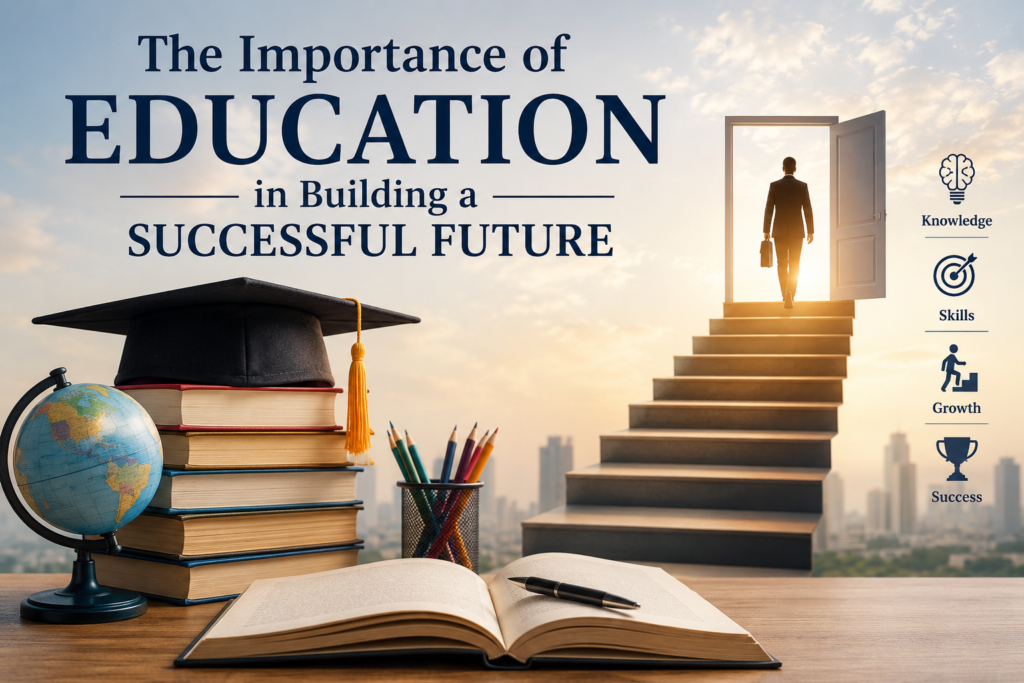
Education is the cornerstone of a successful future. It provides knowledge, develops essential skills, enhances career opportunities, and fosters personal growth. Beyond individual benefits, education contributes to social progress, economic development, and global innovation.
In a world that is constantly evolving, education remains one of the most powerful tools for achieving success and creating positive change. By investing in education and embracing lifelong learning, individuals can unlock their full potential and build a brighter, more prosperous future for themselves and society as a whole.
