
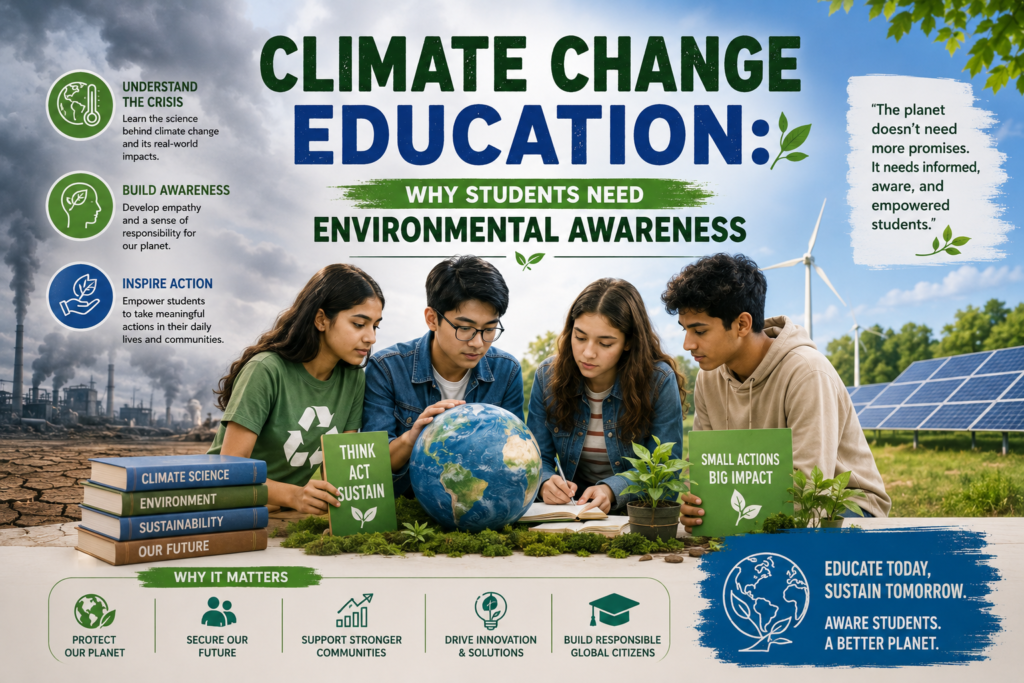
Climate change is one of the most pressing challenges facing the world today. Rising temperatures, extreme weather events, melting glaciers, and environmental degradation are affecting communities across the globe. As future leaders, innovators, and decision-makers, students play a vital role in addressing these issues. This is why climate change education and environmental awareness have become essential parts of modern learning.
Understanding Climate Change
Climate change refers to long-term changes in global temperatures and weather patterns. While natural factors can influence the climate, human activities such as burning fossil fuels, deforestation, and industrial pollution have significantly accelerated environmental changes.
Educating students about climate change helps them understand the causes and consequences of these environmental challenges. With accurate knowledge, they can make informed decisions and contribute to sustainable solutions.
Building Environmental Responsibility
Environmental awareness encourages students to recognize the impact of their actions on the planet. Simple habits such as conserving water, reducing waste, recycling materials, and saving energy can make a meaningful difference when practiced consistently.
By learning about environmental responsibility at an early age, students develop values that promote sustainable living throughout their lives. These habits not only benefit the environment but also create healthier communities.
Encouraging Critical Thinking and Problem-Solving
Climate change is a complex issue that requires innovative solutions. Climate education challenges students to think critically about environmental problems and explore practical ways to address them.
Through projects, discussions, and research activities, students learn to analyze data, evaluate evidence, and develop creative ideas. These skills are valuable not only for environmental issues but also for academic and professional success in various fields.
Preparing Students for Future Careers
As industries increasingly focus on sustainability and environmental protection, new career opportunities are emerging in renewable energy, environmental science, conservation, green technology, and sustainable development.
Climate change education introduces students to these growing fields and helps them understand the skills needed for future careers. It prepares them to contribute to a workforce that values innovation and environmental stewardship.
Promoting Global Citizenship
Environmental challenges do not recognize national borders. Climate change affects people worldwide, making international cooperation essential. By learning about global environmental issues, students develop a broader understanding of how their actions can impact communities across the world.
This awareness fosters empathy, responsibility, and a sense of global citizenship. Students become more engaged in finding solutions that benefit both local communities and the planet as a whole.
Inspiring Positive Action
One of the most important benefits of climate change education is that it empowers students to take action. Whether participating in community clean-up programs, planting trees, advocating for sustainability initiatives, or educating others, students can make a real difference.
Understanding environmental issues helps transform concern into action. Even small efforts can contribute to larger environmental goals when communities work together.
Supporting Sustainable Development
Education plays a crucial role in achieving a sustainable future. When students understand the relationship between environmental protection, economic growth, and social well-being, they are better equipped to support sustainable development practices.
Climate education helps young people appreciate the importance of balancing human needs with environmental conservation for future generations.
Conclusion
Climate change education is more than just learning about environmental problems—it is about preparing students to become informed, responsible, and proactive citizens. By developing environmental awareness, students gain the knowledge and skills needed to address global challenges, make sustainable choices, and contribute to a healthier planet. Investing in climate education today helps create a generation capable of building a more sustainable and resilient future for everyone.
