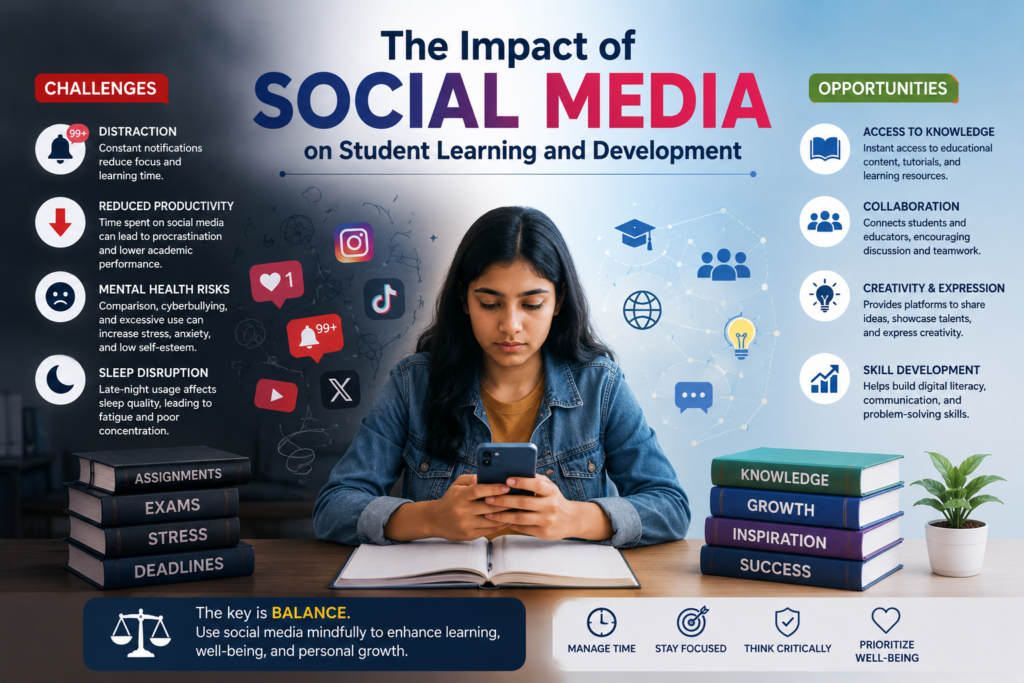
Social media has become an integral part of modern life, especially for students. Platforms such as Instagram, Facebook, TikTok, YouTube, and X (formerly Twitter) are used daily for communication, entertainment, and information sharing. While social media is often viewed as a source of distraction, it also offers valuable opportunities for learning and personal growth. Its impact on student learning and development can be both positive and negative, depending on how it is used.
Social Media as a Learning Tool
One of the greatest advantages of social media is its ability to provide instant access to information. Students can follow educational pages, watch instructional videos, join academic groups, and participate in discussions with peers and experts from around the world. These resources can supplement classroom learning and help students gain a deeper understanding of various subjects.
Many students use platforms like YouTube to learn new skills, solve academic problems, and explore topics that interest them. Educational content creators have made learning more accessible and engaging through visual explanations and interactive content.
Encouraging Collaboration and Communication
Social media makes it easier for students to connect with classmates, teachers, and study groups. Through messaging apps and online communities, students can share notes, discuss assignments, and collaborate on projects regardless of their location.
This increased communication promotes teamwork and allows students to learn from one another. It also helps shy or introverted students participate in discussions more comfortably than they might in a traditional classroom setting.
Developing Digital Literacy Skills
In today’s technology-driven world, digital literacy is an essential skill. By using social media responsibly, students learn how to navigate online platforms, evaluate information sources, and communicate effectively in digital environments.
These skills are valuable not only for academic success but also for future careers. Employers increasingly seek individuals who can use technology efficiently and adapt to digital communication tools.
Expanding Global Awareness
Social media exposes students to different cultures, viewpoints, and global events. Through online interactions, they can gain insights into issues affecting communities around the world. This broader perspective encourages critical thinking, empathy, and cultural understanding.
Students who engage with diverse content often become more informed citizens and develop a greater appreciation for different ideas and experiences.
Challenges and Potential Drawbacks
Despite its benefits, social media can also present challenges. Excessive use may distract students from their studies and reduce the time available for reading, homework, and other productive activities. Constant notifications and entertainment content can make it difficult to maintain focus and concentration.
Additionally, the spread of misinformation on social media can lead students to rely on inaccurate sources. Developing the ability to verify information is crucial in the digital age.
Effects on Mental and Emotional Development
Social media can influence students’ self-esteem and emotional well-being. Comparing themselves to others, seeking online validation, or experiencing cyberbullying may negatively affect mental health. These issues can impact academic performance and personal development.
However, when used positively, social media can provide support networks, motivation, and opportunities for self-expression. Students can connect with communities that share their interests and find encouragement from peers and mentors.
Finding a Healthy Balance
The key to benefiting from social media lies in responsible usage. Students should set limits on screen time, prioritize academic responsibilities, and use social media as a tool for learning rather than a constant source of distraction. Parents and educators can also play an important role by guiding students toward safe and productive online habits.
By balancing online activities with real-world interactions, reading, and study time, students can maximize the benefits of social media while minimizing its risks.
Conclusion
Social media has transformed the way students learn, communicate, and develop. It offers valuable educational resources, encourages collaboration, and helps students build important digital skills. At the same time, excessive or irresponsible use can lead to distractions, misinformation, and emotional challenges. When used wisely and in moderation, social media can be a powerful tool that supports student learning, personal growth, and academic success in the digital age.
